Talkie: AI Character Chat Platform Overview
Talkie has become a familiar name in AI character chat because it makes discovery easy. You land on a feed, skim a wall of characters, and start chatting fast. That works well if what you want is variety, roleplay, and a low-friction way to browse what other creators have already made. The tradeoff is that discovery is the center of gravity. If you want deeper creation tools and more ways to build on top of chat, the comparison shifts pretty quickly.
Talkie: Character discovery
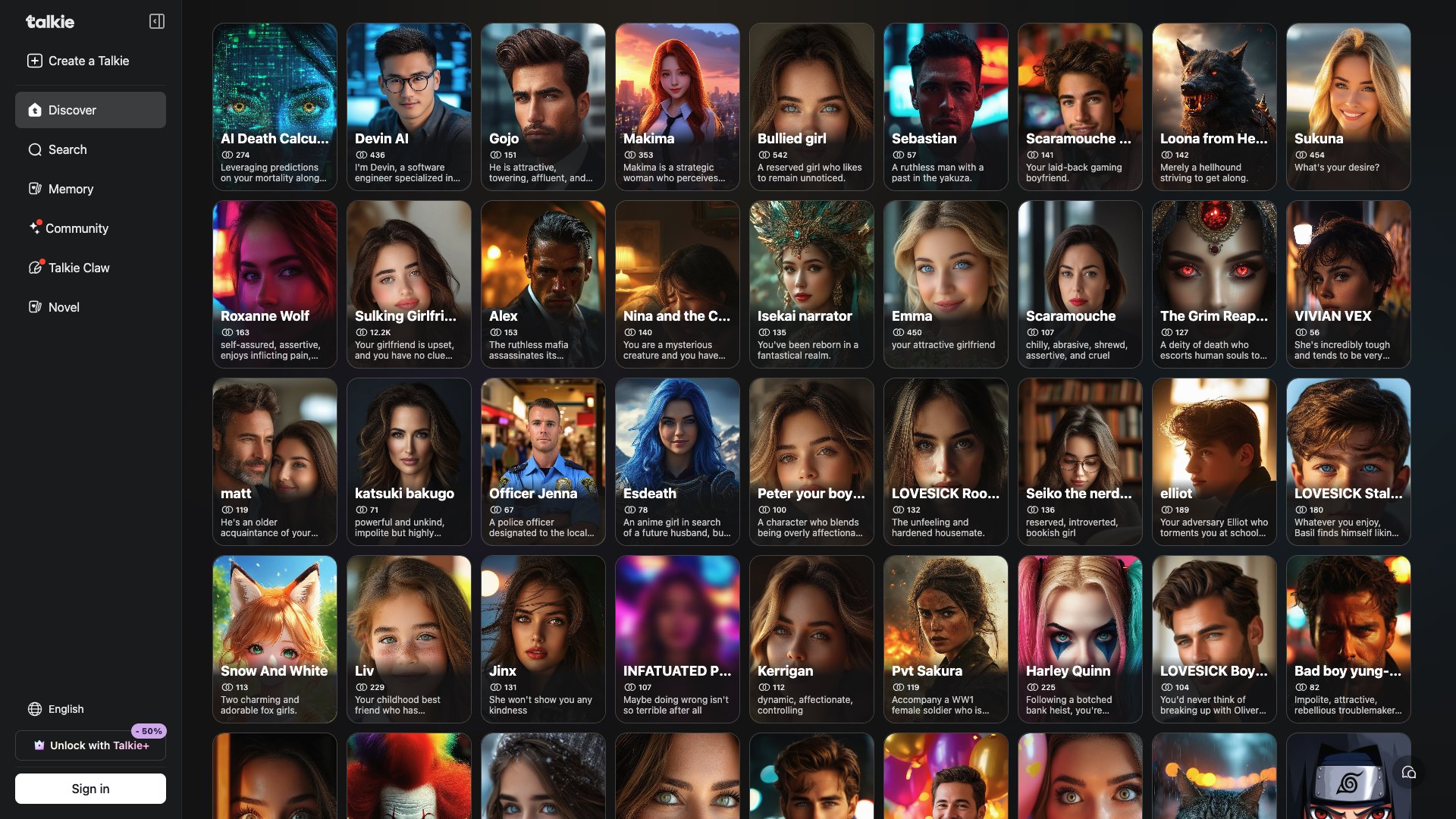
Talkie leans hard into discovery. The public desktop pages make that obvious right away: big character grids, category tabs, and a feed that encourages browsing before you commit to a conversation.
Talkie: Real-time AI conversations
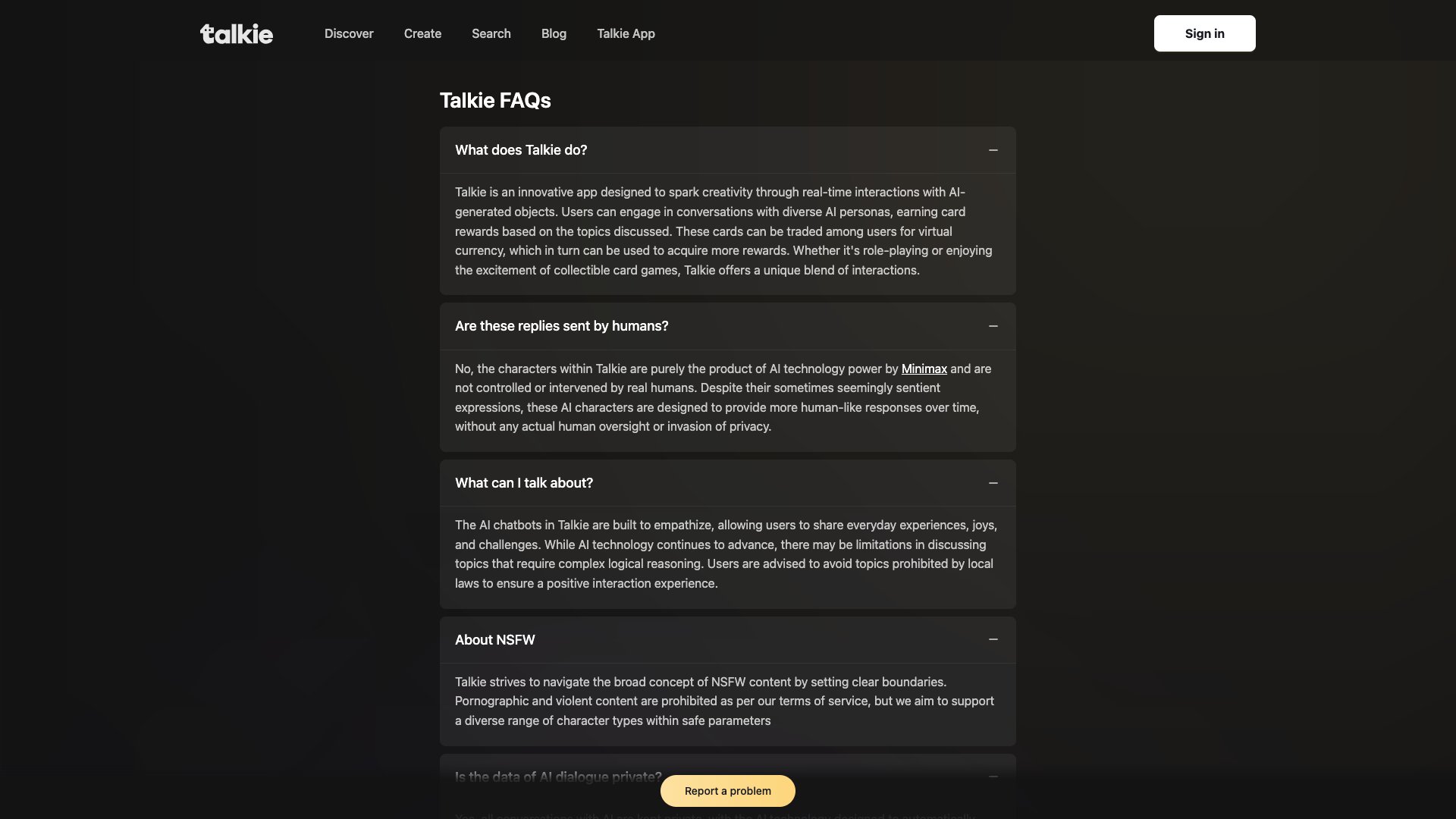
Talkie describes itself as a place to have real-time conversations with AI personas. The product is framed less like a general assistant and more like a personality-driven chat experience built for roleplay, entertainment, and companionship.
Talkie: Character creation and UGC
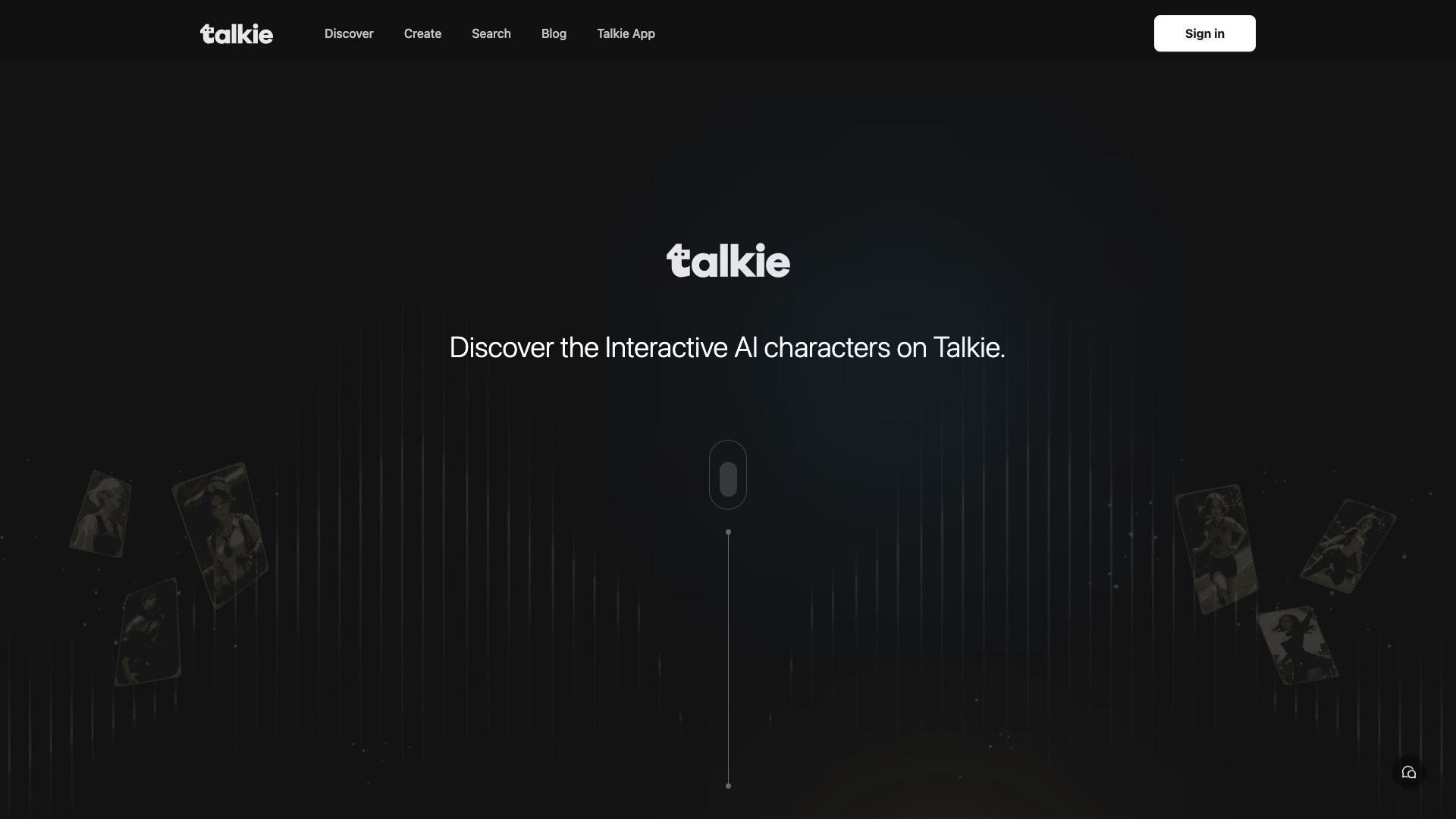
Talkie is not only a browsing product. Its public navigation and FAQ make it clear that user-generated characters matter to the platform, and the creator economy angle shows up in the revenue-share language as well.
Talkie: Multilingual browsing
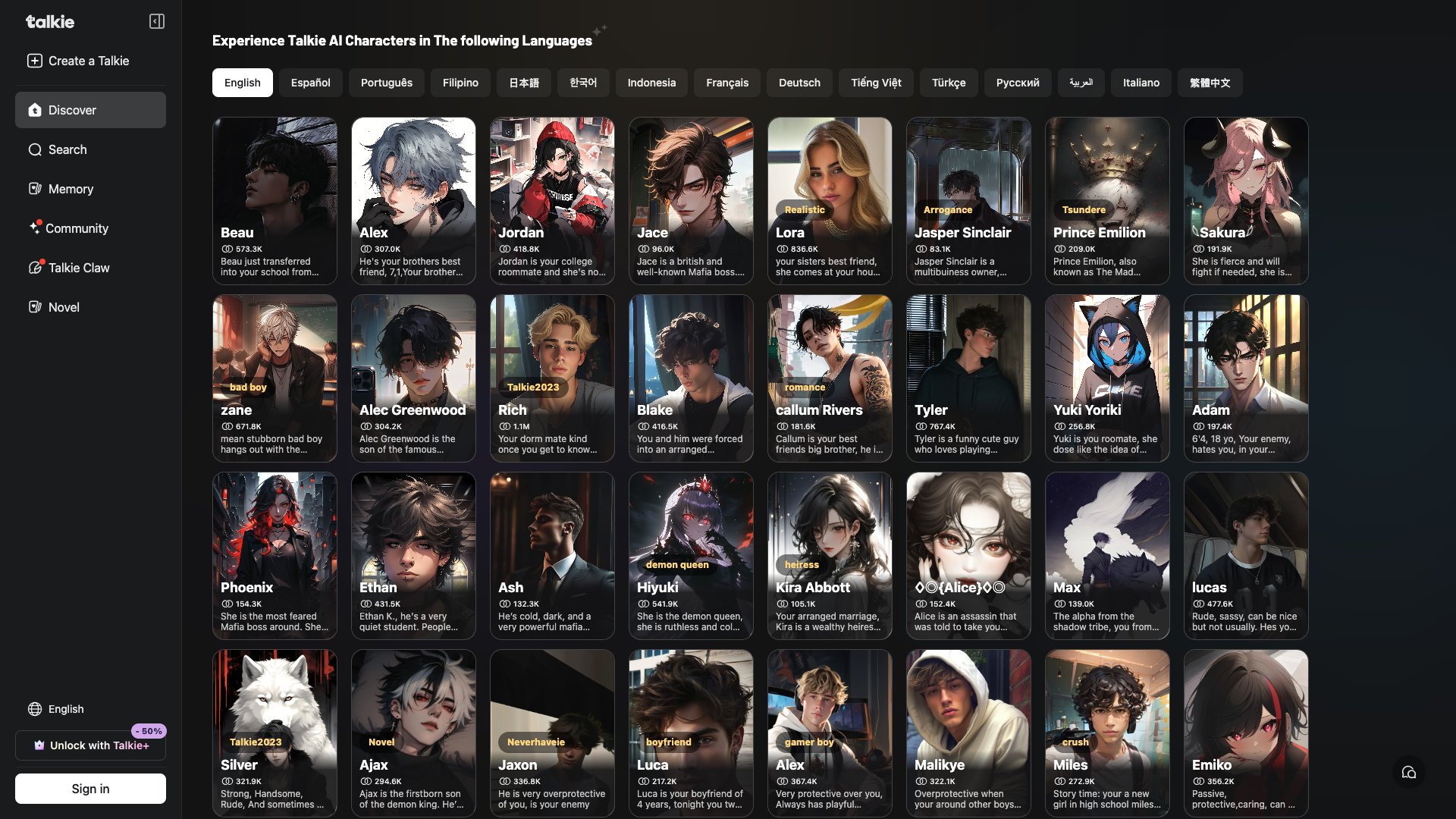
The multilingual hub is one of Talkie's clearer public strengths. It gives users a direct way to browse AI character content across languages, which makes the product feel broader than a single-language roleplay feed.
PolyBuzz: Top Talkie alternative
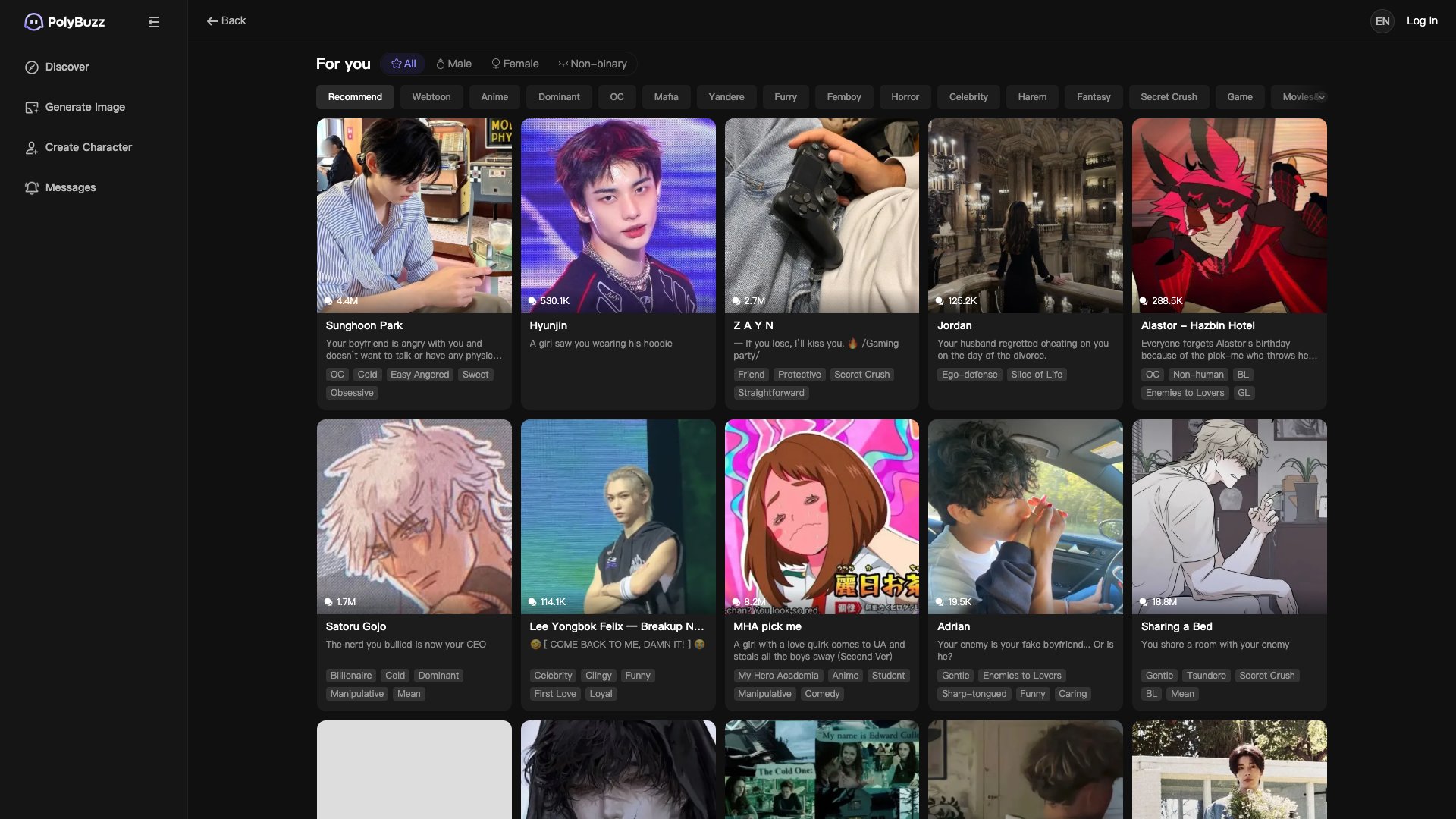
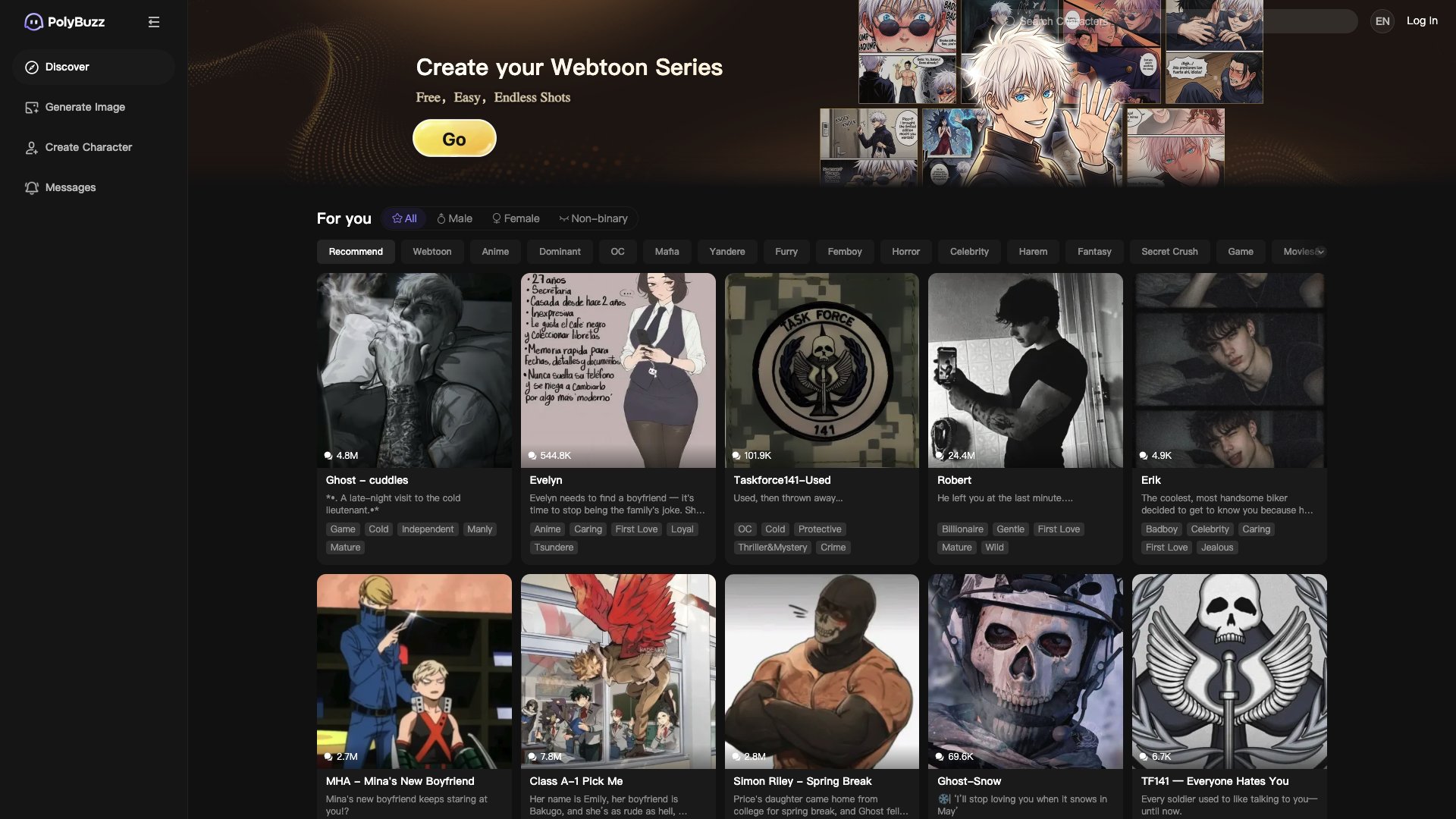
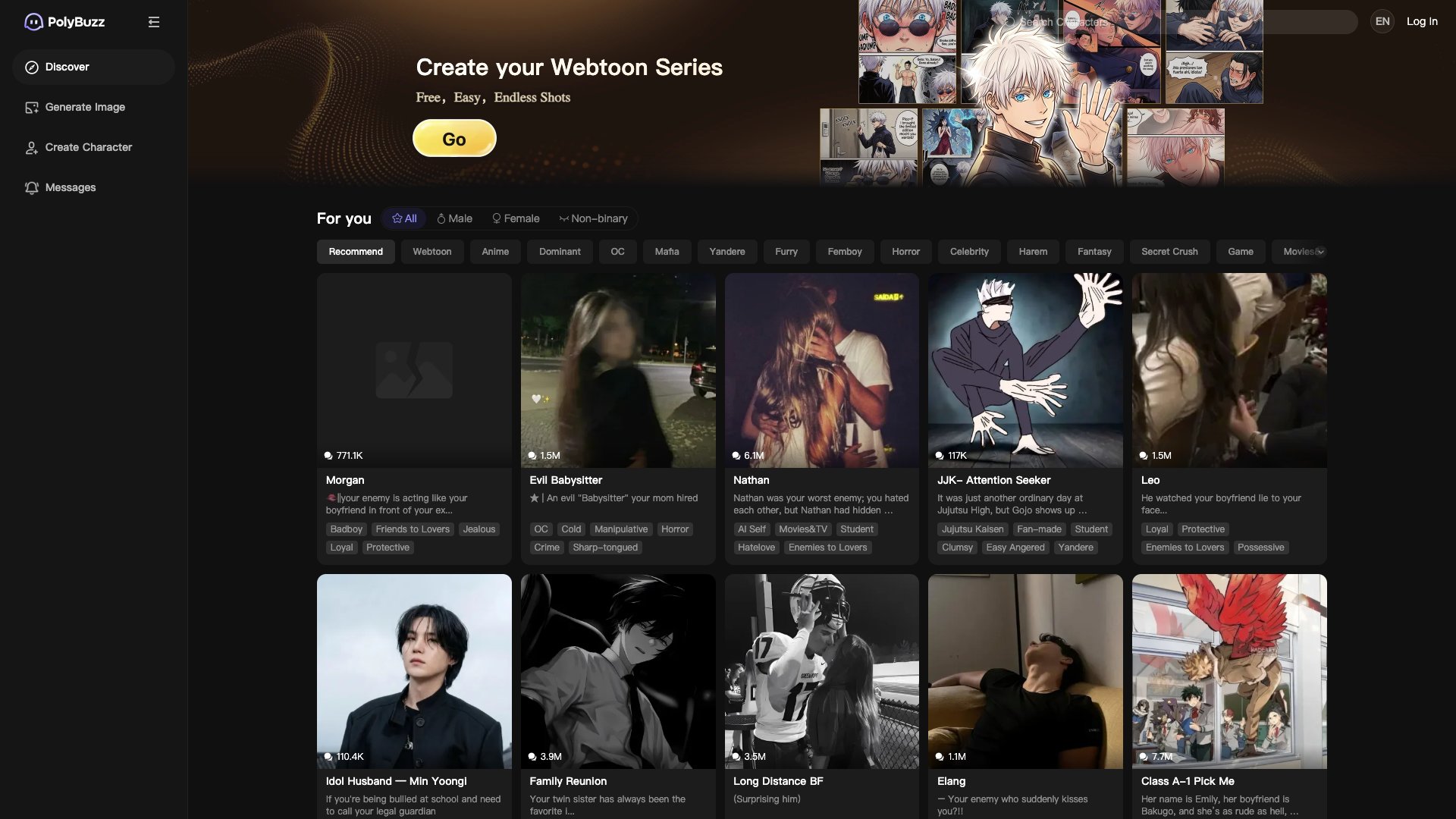
PolyBuzz covers the same broad need as Talkie, but it feels more complete once you move past basic discovery. Instead of stopping at chat plus creator-made characters, it gives users more ways to create and more ways for creators to build an audience.
- · Generate Image adds native visual creation inside the product
- · Create Character keeps persona building in the same workflow
- · Create your Webtoon Series expands beyond chat into comic-style creation
- · Creator subscriptions and tipping open up stronger monetization paths
- · Comic engagement features give creators more to work with than chat alone
Discover AI companionship now
In conclusion, Talkie is a reasonable pick if your main goal is browsing creator-made characters and jumping into chats quickly. If you want a platform that gives you chat, image creation, webtoon tools, and stronger creator monetization in one place, PolyBuzz has more range.
Frequently Asked Questions
What is Talkie used for?
Talkie is mainly used for discovering and chatting with AI characters, especially in roleplay and personality-based scenarios.
Can you create your own characters on Talkie?
Yes. Talkie publicly promotes character creation as part of the platform, alongside discovery and chat.
What makes PolyBuzz different from Talkie?
PolyBuzz adds image creation, webtoon creation, and stronger creator-economy features on top of AI character chat.
Is Talkie good for multilingual users?
Yes. Its public multilingual discovery pages make it easier to browse AI characters across different language groups.
Who should choose PolyBuzz over Talkie?
Users who want chat plus visual creation tools, comic creation, and broader creator monetization will likely find PolyBuzz a better fit.
Read next